Solutions · Hospitals and clinics
Patient and staff safety with respect for privacy
A multi-specialty hospital means hundreds of people, dozens of departments and round-the-clock operation. n7kel designs security and access control systems for healthcare facilities and adds video analytics where it helps staff. Patient face check-in (n7kel Access): a patient who has booked an appointment and given consent walks in without queuing at the registration desk. Patient flows and waiting times: n7kel Flow.
Patient check-in
Patient recognized
Consent to face check-in on file
Appointment opened
- Room
- 214
- Specialist
- General practitioner
- Time
- 10:30
Patient record opened for the doctor
- 10:24:05Face recognized
- 10:24:06Appointment found
- 10:24:06Appointment opened, doctor notified
Security airlock 1
- Outer door · closed
- Inner door · open
- In the airlock: 1 person
Entry log
- 10:28Face · Employee 02Access granted
- 10:27Card 0291Access granted
- 10:25Card 0388No access to zone
- 10:24Face · PatientAppointment found
Challenges
What matters to a hospital
Access to departments
Intensive care, the operating suite, the pharmacy, rooms holding controlled drugs — access for authorized staff only.
Nurses’ station
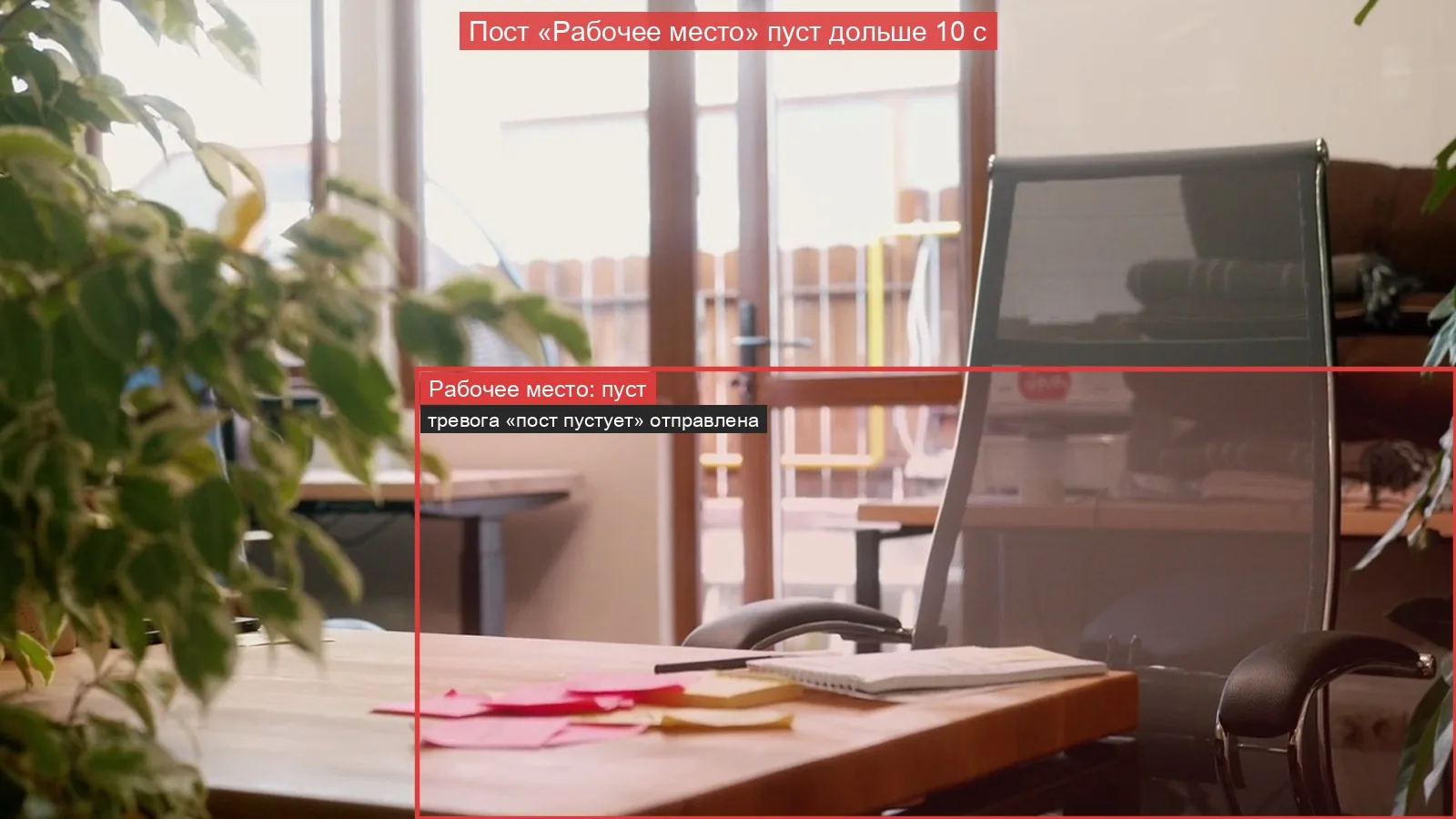
The station must not stay unattended for long, especially at night and in departments with critically ill patients.
Person on the floor
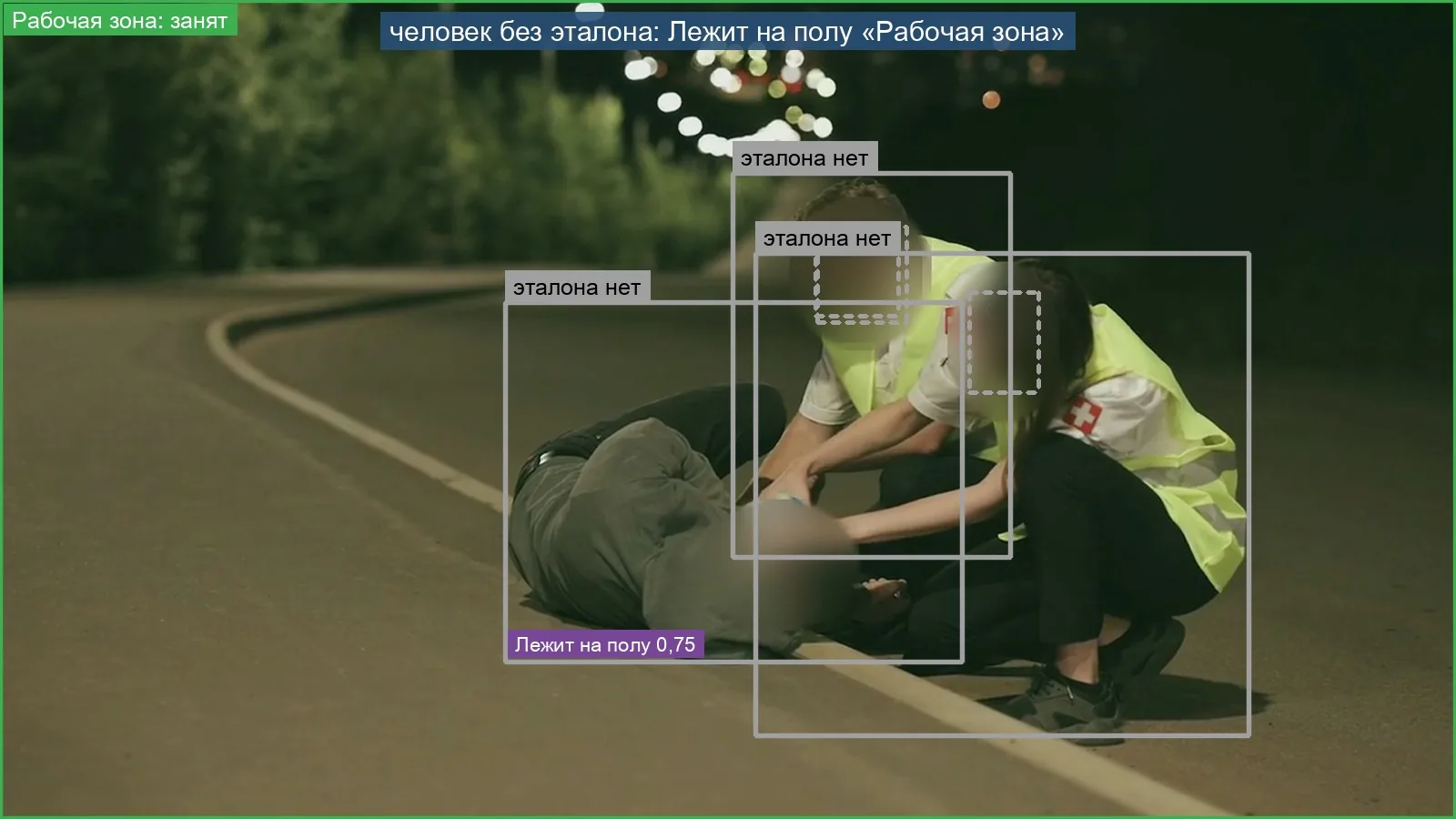
A person is lying on the floor in a corridor or on a staircase, and the system notifies the staff on duty; performance on the department’s cameras is verified in the pilot.
Patient check-in by appointment
A patient who has booked an appointment and given consent enters the building; the camera recognizes them and the appointment opens automatically, with no queue at the registration desk.
n7kel video analytics
What the system sees
- a person on the floor in corridors, halls and on staircases — an immediate notification to the staff on duty;
- post occupancy: whether the nurses’ station or security post is unattended, the duration of absences;
- entry into a marked zone: staff-only rooms and restricted areas;
- required workwear for a post: for example, gloves — the set of requirements is defined for the post and tested on your recordings during the pilot;
- low light: night mode in departments.
n7kel Access · we design and implement
Patient face check-in
A separate module of n7kel Access, ordered by the facility. The solution is part of n7kel’s current projects for multi-specialty hospitals. The hospital is the personal data controller. Biometrics are a special category of personal data, so the solution works only for patients who have given consent.
Booking on the hospital website
The patient books an appointment and enters passport details. Separately and voluntarily — in the form required by law — they consent to face recognition at the entrance or decline it; declining does not affect the booking or the appointment.
Data verification
The booking details are checked against sources the hospital is legally entitled to use — for example, a state registry through the hospital’s own access; from this data a face reference is prepared for matching at the entrance. n7kel does not get access to registries.
Recognition at the entrance
A camera at the entrance recognizes the patient and matches them with booked appointments.
The appointment opens automatically
Registration staff and the doctor see that the patient has arrived; there is no need to queue at the registration desk.
No consent — standard registration
A patient who has not given consent registers at the desk as usual; the same applies if the system has not confirmed a match. The system does not identify visitors for whom there is no face reference.
Storage and deletion
Face references are stored within the hospital’s own infrastructure and deleted when consent is withdrawn and in line with the hospital’s retention policy. The final legal assessment is given by the hospital’s legal counsel.
Person on the floor: straight to the staff on duty
If someone falls and is lying in a corridor, hall or on a staircase, n7kel AI records a safety event and immediately notifies the staff on duty, with the frame and the location. The system does not identify the patient; other people’s faces are blurred.
Privacy
Privacy of patients and staff
- recognition of patients and visitors is off by default; it is enabled only by the hospital’s decision, as a separate module, and only on a lawful basis — the patient’s consent given when booking an appointment;
- patient face check-in is available only to patients who gave consent when booking; without consent, standard registration at the desk; the system does not identify other visitors;
- biometrics are a special category of personal data: the hospital is the controller, patients’ face references are stored within its own infrastructure and deleted when consent is withdrawn; the final legal assessment is given by the hospital’s legal counsel;
- staff are identified only with the employees’ written consent;
- n7kel Flow analytics in a hospital is anonymous: headcount, queues and waiting times;
- in video analytics events, the faces of everyone except the person the event concerns are irreversibly blurred on site equipment before saving;
- a “person on the floor” event is stored with a frame and a clip for the retention period set by the facility; access is limited to the duty service according to roles;
- any restrictions needed — cameras, zones, modules, retention periods — are set at the hospital’s request; audio processing is enabled only by the facility’s decision and with notice;
- all data stays in the hospital, is confidential and is not shared with third parties, except where expressly provided for by the agreement and the law; a fully autonomous installation with no external connections is available;
- every view and every download of a frame is recorded in the access log;
- auxiliary condition assessment (fatigue and stress) can be fully disabled in the configuration.
Scenarios
Typical scenarios in a hospital
n7kel video analytics — functions of our products on your cameras. We design and implement — security systems that we supply, install and integrate.
| Location | Situation | What n7kel does |
|---|---|---|
| Corridor, staircase | A person is lying on the floor | n7kel video analytics: a “person on the floor” event with a frame, notification to the staff on duty |
| Nurses’ station | Station unattended at night | n7kel video analytics: an event when the post’s time threshold is exceeded |
| Intensive care, operating suite | Access for department staff only | We design and implement: access control with card and face access, permissions by department |
| Pharmacy, drug storage | Entry control and access log | We design and implement: access control, video surveillance; n7kel video analytics — entry into a marked zone |
| Building entrance | A patient arrives for a booked appointment | n7kel Access: patient face check-in — the appointment opens automatically; only for patients who have given consent |
| Registration desk, corridors outside doctors’ rooms | Where patients wait longest | n7kel Flow: anonymous counting, queues and waiting times |
| Admissions, entrances | Visitor flow, conflict situations | We design and implement: video surveillance, panic alarms, integration with security |
| Grounds, parking | Perimeter and approaches | We design and implement: perimeter and site video surveillance |
What is needed to start
n7kel AI is trained and tested on ordinary 2D images, so the cameras you already have are suitable. 3D cameras are supported too, if they are already on site or the task requires them.
- a survey of the buildings: entrances, departments, posts, existing cameras and access control;
- agreement on the purposes of video analytics with the facility’s management and legal counsel; an internal policy and a staff notice — we provide a template;
- selection of 1–2 departments for a 2–4 week pilot;
- for patient face check-in — the consent procedure at booking, connection to the hospital’s website and appointment system, and an assessment by the hospital’s legal counsel;
- a final report with figures against criteria agreed before the start.
Let’s discuss your facility
We start with a survey of the buildings and departments. We will propose what is covered by video analytics and what by a design for access control, video surveillance and patient face check-in.
Frames show n7kel AI output on licensed stock footage; people’s faces are blurred. The interfaces in the illustrations are schematic mockups with sample data.